Improving Logistics Efficiency for Cross-Border Trade: A Practical Guide to Streamlining International Operations
Did you know that inefficient cross-border logistics costs businesses an estimated 10-15% of their total international trade value? I learned that the hard way when I watched a $50,000 shipment sit at customs for three weeks because someone misspelled a city name on the commercial invoice.
Cross-border trade is exploding, but the logistics side of things? It’s still a mess for most companies. I’ve spent the better part of a decade dealing with international shipments, and let me tell you – the difference between a smooth operation and a total disaster often comes down to having the right systems in place. When your shipments are crossing multiple borders, dealing with different regulations, and moving through various hands, every little inefficiency multiplies.
In this guide, I’m gonna walk you through the strategies that actually work for improving logistics efficiency for cross-border trade. We’re talking real-world tactics that’ll help you reduce costs, speed up deliveries, and sleep better at night knowing your goods aren’t stuck somewhere in customs purgatory. Whether you’re shipping electronics from China, textiles from Vietnam, or machine parts to Brazil, these principles apply across the board.
Understanding the Biggest Bottlenecks in Cross-Border Logistics
Look, I’ve made every mistake in the book when it comes to international shipping. The first major shipment I managed sat at the Port of Long Beach for 12 days because our customs broker was waiting for a document that we’d already sent – they just couldn’t find it in their system.
The reality is that customs clearance delays are the number one killer of logistics efficiency. Every country has different requirements, different systems, and different levels of scrutiny. I’ve seen shipments sail through German customs in 6 hours, while the same product type took 4 days to clear in France. Documentation errors are usually the culprit – a wrong HS code, missing certificates, or incorrect valuations can trigger inspections that bring everything to a grinding halt.
But here’s what really drives me crazy: poor communication between all the parties involved. You’ve got freight forwarders, customs brokers, carriers, warehouse operators, and your own team all trying to coordinate. When someone drops the ball on a status update, you end up with containers sitting at terminals racking up demurrage charges. I once paid $4,800 in detention fees because our freight forwarder didn’t notify us that our container was ready for pickup.
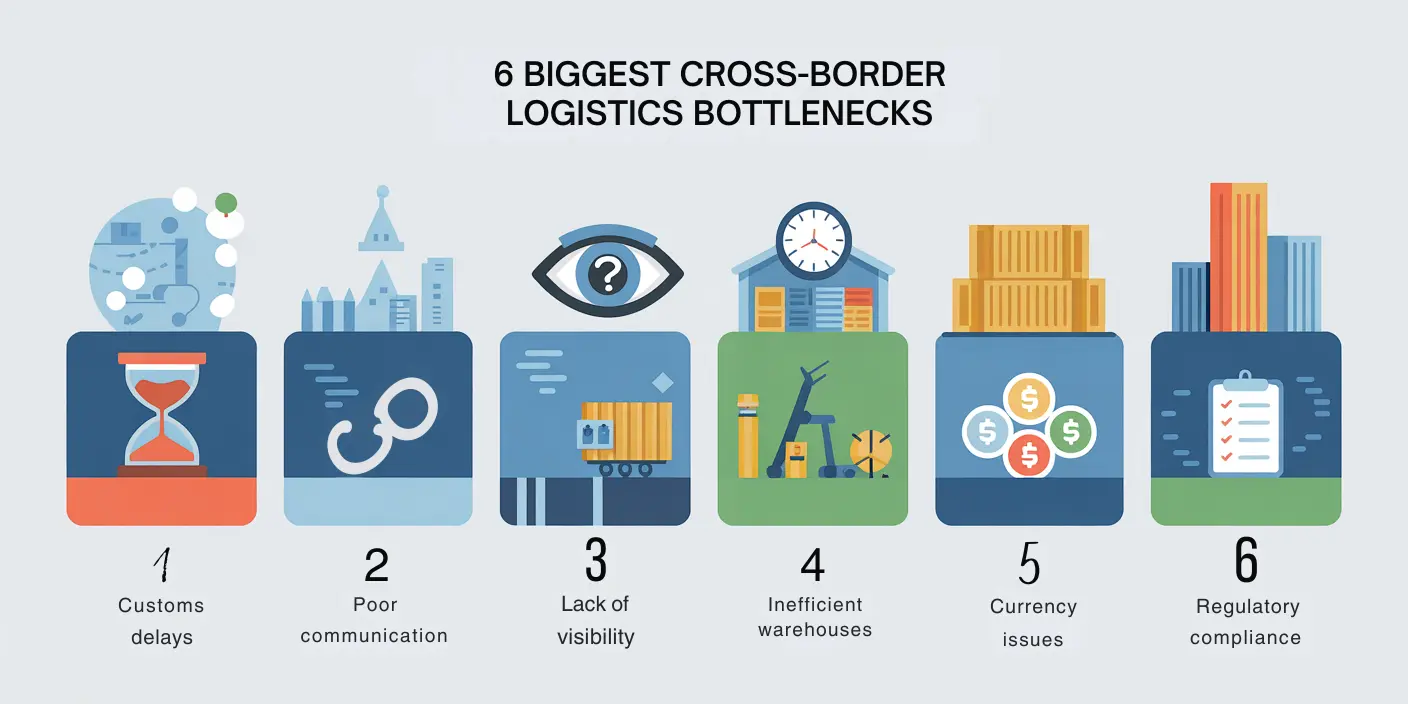
The lack of real-time visibility is another huge bottleneck. With domestic shipments, you can usually track things pretty accurately. Cross-border? Good luck. Your shipment might show “in transit” for two weeks with zero updates. Is it on a ship? Is it cleared customs? Who knows! This uncertainty makes it impossible to give your customers accurate delivery dates, which creates a ripple effect through your entire supply chain.
Inefficient warehouse operations at border points compound these problems. I’ve visited facilities where goods are literally sitting on pallets waiting to be processed because they don’t have enough staff or the right equipment. Some warehouses still use paper-based systems for tracking inventory, which is insane in 2024. Currency fluctuations and payment processing add another layer of complexity – trying to reconcile invoices in three different currencies while exchange rates bounce around is enough to give anyone a headache.
And don’t even get me started on regulatory compliance. Every country has its own import regulations, safety standards, labeling requirements, and prohibited items lists. What’s perfectly legal to import in one country might be restricted or require special licenses in another. Keeping up with changing trade regulations across multiple countries is like trying to hit a moving target while blindfolded.
Choosing the Right Freight Forwarders and Shipping Partners
This is where I wasted so much time and money early on. I thought all freight forwarders were basically the same – boy, was I wrong.
The first freight forwarder I worked with had rock-bottom rates, which seemed great until our first shipment got stuck in customs for three weeks. Turns out they didn’t have established relationships with customs brokers in the destination country, so they were scrambling to find someone who could help. That delay cost us way more than we would’ve spent going with a more expensive but better-connected forwarder.
Here’s what I’ve learned about vetting international logistics providers: you need to dig deeper than just comparing rates. Ask them specific questions about their experience with your trade lanes. How many shipments do they handle per month on the routes you need? Do they have their own customs brokerage division, or do they outsource it? What’s their average customs clearance time for your product category?
The importance of established customs broker relationships cannot be overstated. A good customs broker knows the officers at the ports, understands the quirks of local regulations, and can expedite things when problems arise. I now only work with freight forwarders who have owned or long-term partner customs brokers in each country I ship to. It’s made a massive difference.
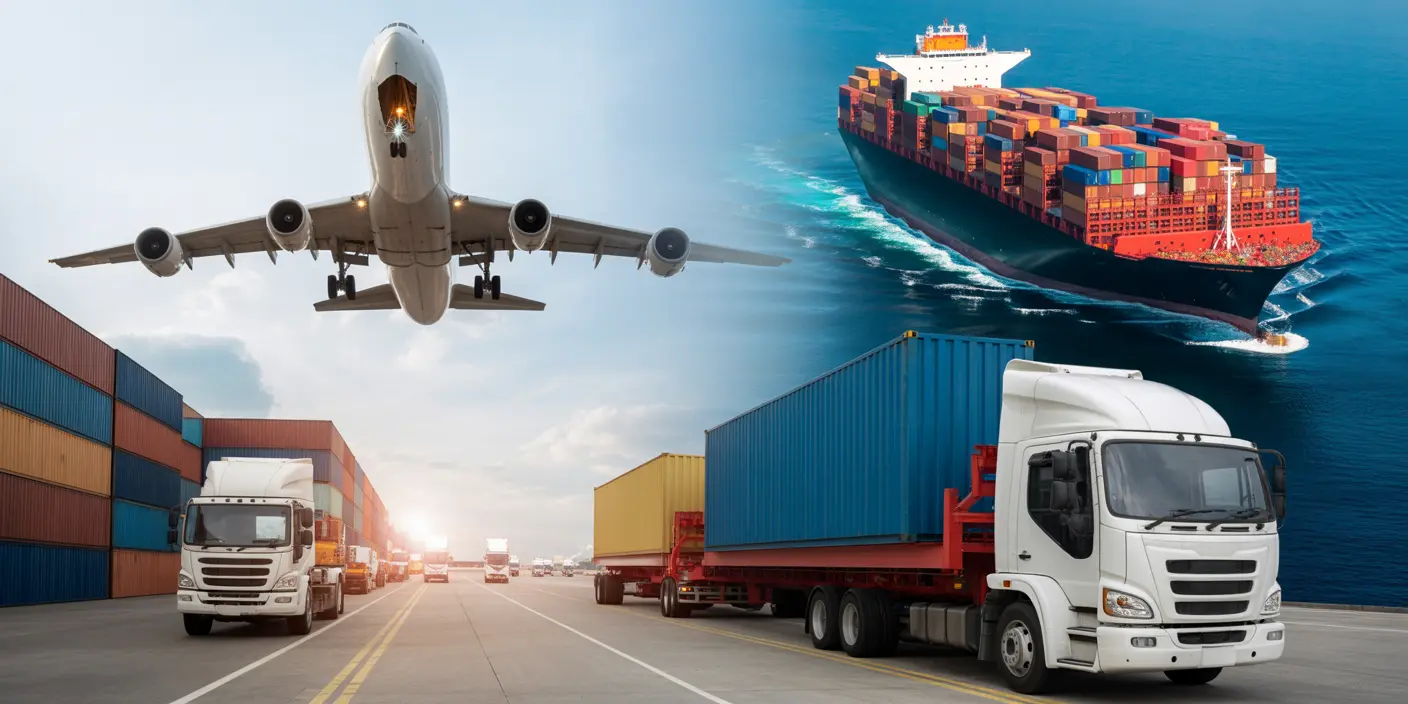
Comparing air freight versus ocean freight isn’t just about cost – it’s about the total picture. Yeah, ocean freight is cheaper per unit, but if your goods sit at port for an extra week or you’re tying up working capital in slow-moving inventory, those savings disappear fast. I use air freight for high-value, time-sensitive goods and ocean freight for larger volume, lower-margin products. Simple as that.
Building long-term partnerships with reliable carriers has saved my butt more times than I can count. When there’s a port strike or capacity crunch, carriers prioritize their loyal customers. I once got space on a vessel during peak season because we’d been consistently giving business to that carrier for three years. Meanwhile, competitors who shopped around for the lowest rate every time were left scrambling.
Red flags to watch for: freight forwarders who are slow to respond to emails, can’t provide references from similar businesses, don’t have technology for tracking and visibility, or promise rates that seem too good to be true. If a forwarder can’t clearly explain their process for handling customs issues or delays, run the other way.
Technology capabilities separate good forwarders from great ones. The best freight forwarders have online portals where you can get real-time updates, upload documents, request quotes, and see all your shipment history in one place. They integrate with your systems through APIs so data flows automatically. They use predictive analytics to flag potential delays before they happen. This stuff matters way more than saving $50 per shipment.
Streamlining Documentation and Customs Compliance

Okay, documentation is boring as hell, but it’s also where most cross-border shipments go wrong. I can’t tell you how many times I’ve seen six-figure shipments held up because someone put the wrong unit of measure on a packing list.
The essential documents for cross-border shipments include your commercial invoice, packing list, bill of lading, certificate of origin, and any product-specific certificates like phytosanitary certificates for agricultural products or safety certifications for electronics. Each document needs to be accurate, consistent with the others, and compliant with both the exporting and importing country’s requirements.
I used to manage all this stuff in Excel spreadsheets and Word templates. What a nightmare! We’d have different versions floating around, people would use outdated templates, and errors were constant. Switching to digital documentation systems was honestly one of the best decisions I ever made. Now everything is generated automatically from our order management system, which pulls data directly from our product database. The consistency alone has cut our customs holds by probably 60%.
Here’s a pro tip for minimizing customs holds and inspections: be as specific and accurate as possible with your product descriptions and HS codes. Don’t just write “machine parts” – describe exactly what each item is, what it’s made of, and what it’s used for. Vague descriptions trigger red flags for customs officers. I learned this after having a shipment inspected because I described something as “electronic components” instead of “printed circuit boards for LED lighting systems.”
Understanding Harmonized System codes and classification is critical. These six to ten-digit codes determine your duty rates, import restrictions, and trade agreement eligibility. A lot of companies just use whatever HS code their supplier suggests, which is a mistake. I now have a customs specialist review our classifications annually because even small changes in how products are described can move them into different HS codes with wildly different duty rates.
Utilizing Free Trade Agreements is literally free money on the table. If you’re importing from countries that have FTAs with your destination market, you can often get reduced or zero duty rates – but only if you have the proper certificates of origin and comply with the rules of origin requirements. I’ve saved clients hundreds of thousands of dollars annually by making sure they’re taking advantage of programs like USMCA, the EU’s various FTAs, and ASEAN agreements.
Creating standardized processes for documentation accuracy means having checklists, templates, and review procedures. Every shipment goes through the same steps, with the same quality checks. It sounds tedious, but the first time it saves you from a major screw-up, you’ll be glad you did it. We have a two-person review system where one person prepares the documents and another reviews them before submission. Simple, but effective.
Leveraging Technology for Better Visibility and Control

Technology has been a total game-changer for cross-border logistics, but a lot of companies are still operating like it’s 1995.
I implemented a Transportation Management System about four years ago, and I honestly don’t know how I managed without it. A good TMS for cross-border operations handles everything from rate shopping across multiple carriers to automated booking, documentation generation, tracking, and analytics. The ROI was obvious within six months – we were spending less time on manual tasks and catching problems way earlier.
Real-time tracking and IoT sensors have evolved dramatically. I remember when “tracking” meant calling the freight forwarder and hoping they had an update. Now we have GPS trackers on high-value shipments that update every few hours, plus temperature and shock sensors for sensitive products. I can literally watch shipments move across the ocean and get alerts if something goes wrong. It’s especially useful for perishable goods or pharmaceuticals where temperature excursions can ruin entire shipments.
Automated customs declaration software is another huge efficiency booster. Instead of manually filling out customs forms for every shipment, the software pulls data from your commercial invoices and generates the declarations automatically. It knows the specific requirements for each country and flags potential issues before you submit. We went from spending 2-3 hours per shipment on customs paperwork to about 15 minutes.
Blockchain applications in international trade are still pretty new, but they’re promising. The idea is to have a shared, immutable ledger that all parties in the supply chain can access – customs authorities, freight forwarders, carriers, banks, everyone. This eliminates discrepancies between different parties’ records and speeds up processes like letter of credit verification. I’ve participated in a couple pilot programs, and while there are still kinks to work out, I think this technology will be huge in the next five years.
Data analytics for route optimization helps you make smarter decisions about which carriers, routes, and transportation modes to use. Our TMS analyzes historical performance data to show us which routing options have the best on-time delivery rates, lowest costs, and fewest customs issues. This takes the guesswork out of logistics planning.
Cloud-based platforms for multi-party collaboration are essential when you’re coordinating between teams in different countries. We use a platform where our suppliers, freight forwarders, customs brokers, and warehouse operators all have access to the same information. When a shipment status changes, everyone sees it immediately. No more endless email chains trying to figure out where something is.
Optimizing Inventory Management Across Borders
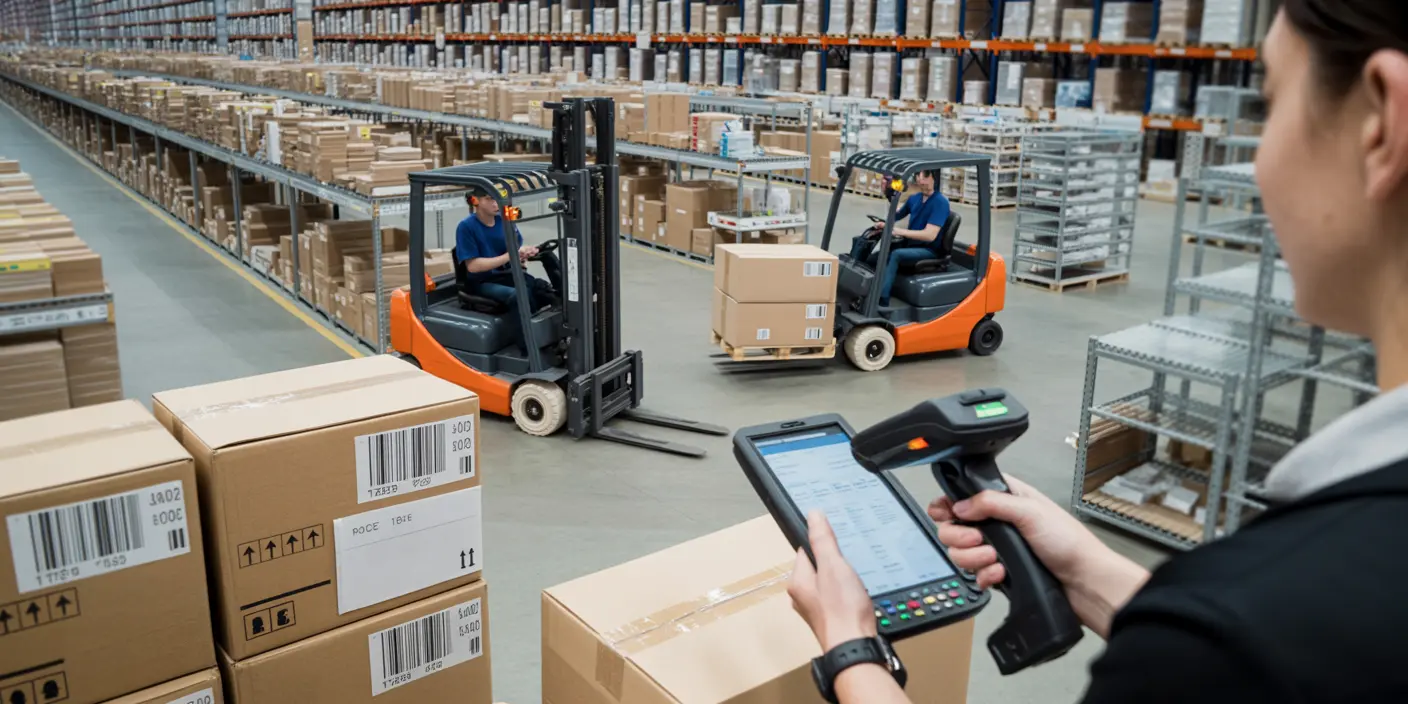
Inventory management gets way more complicated when you’re dealing with international supply chains. The longer lead times and higher uncertainty mean you can’t just use the same strategies that work for domestic operations.
Strategic positioning of distribution centers has been one of my biggest levers for improving efficiency. Instead of shipping everything directly to our end customers from overseas, we maintain regional distribution centers in key markets. This lets us consolidate international shipments into larger, more economical volumes, then handle the last mile domestically. The catch is finding the right balance – too many DCs and you’re spreading inventory too thin; too few and you’re not getting the benefits.
Using bonded warehouses to defer duties is a strategy that not enough companies take advantage of. A bonded warehouse is a facility where you can store imported goods without paying customs duties until the goods actually leave the warehouse. This is huge for cash flow, especially if you’re importing large quantities but selling them gradually over time. I’ve also used bonded warehouses to repackage or relabel products for different markets without having to pay duties twice.
The just-in-time versus buffer stock debate is different for international supply chains. JIT works great when you have reliable, short lead times. But when you’re shipping from Asia to North America with 30-40 day transit times, plus potential delays, JIT becomes really risky. I’ve found a hybrid approach works best – maintain safety stock for your fast-moving SKUs and use JIT principles for slower-moving or bulkier items.
Demand forecasting tools become essential when you’re placing orders months in advance. We use software that analyzes sales trends, seasonality, and external factors to predict demand across different markets. It’s not perfect, but it’s way better than guessing. The key is to constantly refine your forecasts based on actual performance and adjust your ordering patterns.
Managing inventory obsolescence with longer transit times is a real challenge, especially for products with short life cycles like fashion or consumer electronics. You need to factor in that by the time inventory arrives, it’s already weeks or months old. I’ve learned to be more conservative with forecasts for trend-driven products and build in markdown budgets from the start.
Cross-docking techniques at border facilities can significantly speed up your supply chain. Instead of unloading containers into a warehouse for storage, you immediately transfer goods from inbound to outbound transportation. This works great when you have predictable demand and good coordination between your inbound shipments and outbound distribution. We’ve cut 3-5 days out of our delivery times by cross-docking at strategic locations near major ports.
Building Contingency Plans for Disruptions
If COVID taught us anything, it’s that your supply chain will get disrupted. The question isn’t if, but when and how bad.
Creating backup carrier and route options is non-negotiable now. I maintain relationships with at least two carriers on every major trade lane I use. Yeah, it’s more work, and I don’t get the volume discounts I’d get by consolidating everything with one carrier. But when there’s a capacity crunch or service issues, I have alternatives. I’ve also mapped out alternative routing options – like shipping through the Panama Canal versus the Suez Canal, or using different port combinations.
Insurance considerations for international shipments are more complex than domestic coverage. You need to understand the difference between carrier liability (which is limited) and cargo insurance (which you purchase separately). I once assumed our ocean carrier’s insurance covered the full value of our shipment, and when a container fell overboard in a storm, we recovered maybe 20% of our loss. Now I have comprehensive cargo insurance for all international shipments, and it’s honestly cheap compared to the potential exposure.
Handling port strikes and political instability requires constant monitoring and quick decision-making. I subscribe to logistics news services that alert me to potential disruptions, and I’ve built relationships with freight forwarders who have their ear to the ground. When we heard rumors of a potential port strike on the West Coast, we preemptively rerouted shipments through East Coast ports. Cost us a bit more, but we avoided major delays.
Weather-related delays and seasonal planning are predictable to some extent. Typhoon season in Asia, winter storms that shut down ports in the Northeast, hurricane season affecting Gulf Coast operations – these happen every year. I now build in extra lead time for shipments during high-risk periods and maintain higher safety stock levels going into those seasons. Simple, but it prevents panic when inevitable delays happen.
Managing the impact of changing trade regulations is an ongoing challenge. Tariffs change, trade agreements get renegotiated, import restrictions get updated. I have a customs specialist who monitors regulatory changes across all our markets and briefs me quarterly on anything that might affect our operations. When Trump’s tariffs hit Chinese imports, companies that were prepared had alternative sourcing options ready to go; those that weren’t got hammered.
Communication protocols during crisis situations make a huge difference in how well you handle disruptions. We have a rapid response team that includes representatives from procurement, logistics, customer service, and finance. When something major happens, we get on a call within hours, assess the impact, develop response options, and assign action items. Clear communication with customers about delays is also critical – people are way more understanding when you’re upfront and proactive.
Measuring and Improving Your Cross-Border Performance
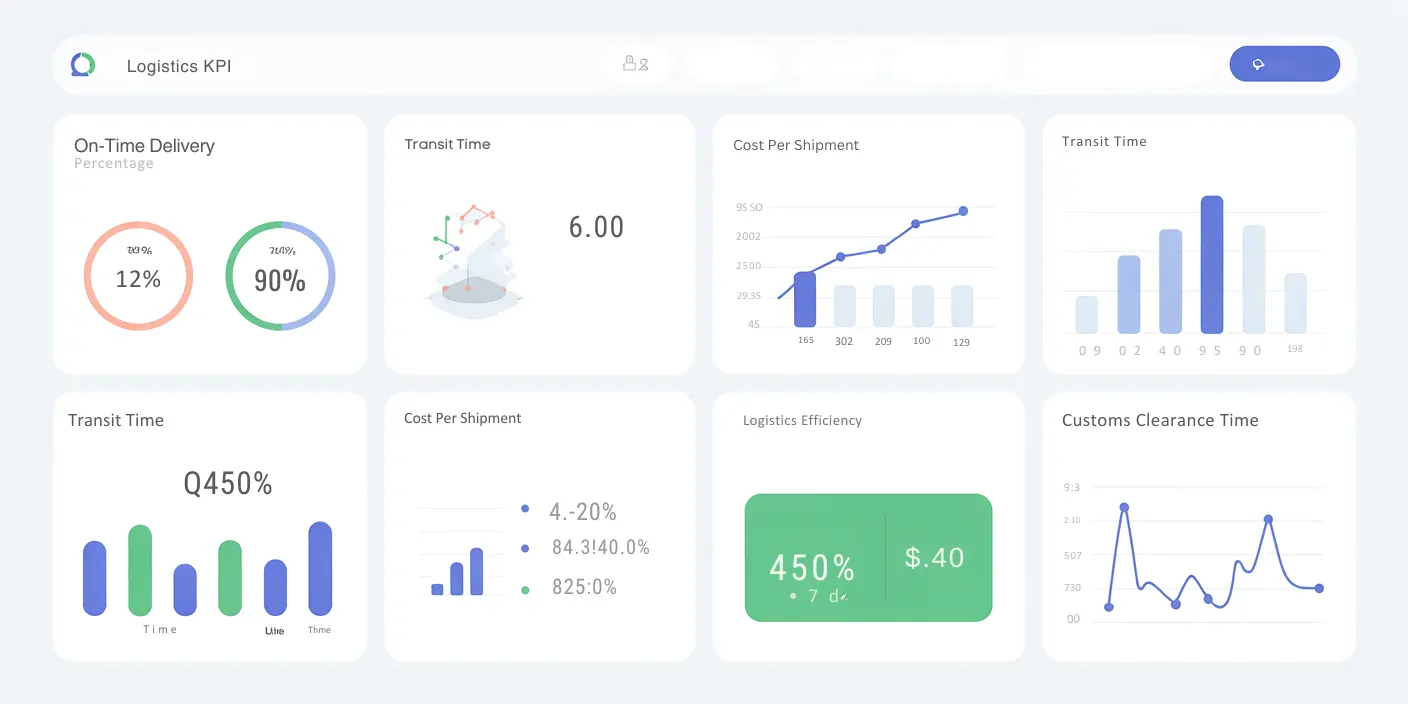
You can’t improve what you don’t measure, right? But a lot of companies are tracking the wrong metrics or not tracking anything at all.
Key performance indicators for international logistics should cover cost, speed, quality, and reliability. I track transit time from factory to delivery, customs clearance time, on-time delivery percentage, damage rates, documentation accuracy, and cost per unit shipped. But here’s what matters more than the individual metrics – the trends over time. Is performance getting better or worse? Where are the pain points?
Calculating total landed costs accurately is critical for pricing decisions and profitability analysis. Landed cost includes the product cost, international freight, insurance, customs duties, tariffs, customs brokerage fees, domestic freight, and any other charges to get the product to your door. I’ve seen companies price products based on just the product cost and freight, then wonder why their margins are terrible. You need a landed cost model that accounts for all these variables.
Benchmarking against industry standards helps you know if your performance is competitive. Organizations like the Council of Supply Chain Management Professionals publish benchmark data for things like logistics costs as a percentage of sales, inventory turnover, and perfect order rates. If your metrics are way off the industry average, that’s a red flag that something needs to improve.
Regular audits of freight charges and accessorial fees have saved me tens of thousands of dollars. Freight forwarders and carriers make billing errors all the time – duplicate charges, incorrect weight calculations, unauthorized surcharges. We do monthly audits of all logistics invoices, and we typically find errors on 5-10% of them. We also do annual RFPs to make sure our rates are still competitive.
Getting feedback from customs brokers and carriers is valuable for identifying improvement opportunities. They see how your shipments compare to other clients and can tell you where you’re creating problems for yourself. Our customs broker once pointed out that we were consistently making the same classification error on one product line, which was triggering unnecessary inspections. Fixed it, and our clearance times improved immediately.
Continuous improvement strategies based on data mean actually doing something with all the metrics you’re collecting. We have quarterly reviews where we analyze our logistics performance, identify the top three opportunities for improvement, and launch initiatives to address them. Small improvements compound over time. Reducing customs clearance time by one day, improving documentation accuracy by 5%, negotiating better rates – it all adds up.
Conclusion
Improving logistics efficiency for cross-border trade isn’t rocket science, but it does require attention to detail, the right partnerships, good technology, and a commitment to continuous improvement. The difference between companies that excel at international logistics and those that struggle usually comes down to having systematic processes and learning from mistakes.
Start with one or two areas where you’re experiencing the most pain – maybe it’s customs delays, or poor visibility, or high freight costs – and focus your improvement efforts there. You don’t need to overhaul everything at once. Get your documentation processes nailed down. Find reliable logistics partners. Implement a decent TMS if you don’t have one.
Remember that international trade regulations are constantly changing, so staying current is essential. What works today might not work in six months when new tariffs kick in or trade agreements get renegotiated. Build flexibility into your supply chain and maintain alternative options.
I’d love to hear about your experiences with cross-border logistics. What strategies have worked for you? What mistakes have you made that others can learn from? Drop your thoughts in the comments – we’re all figuring this stuff out together, and sharing knowledge makes everyone better at it.