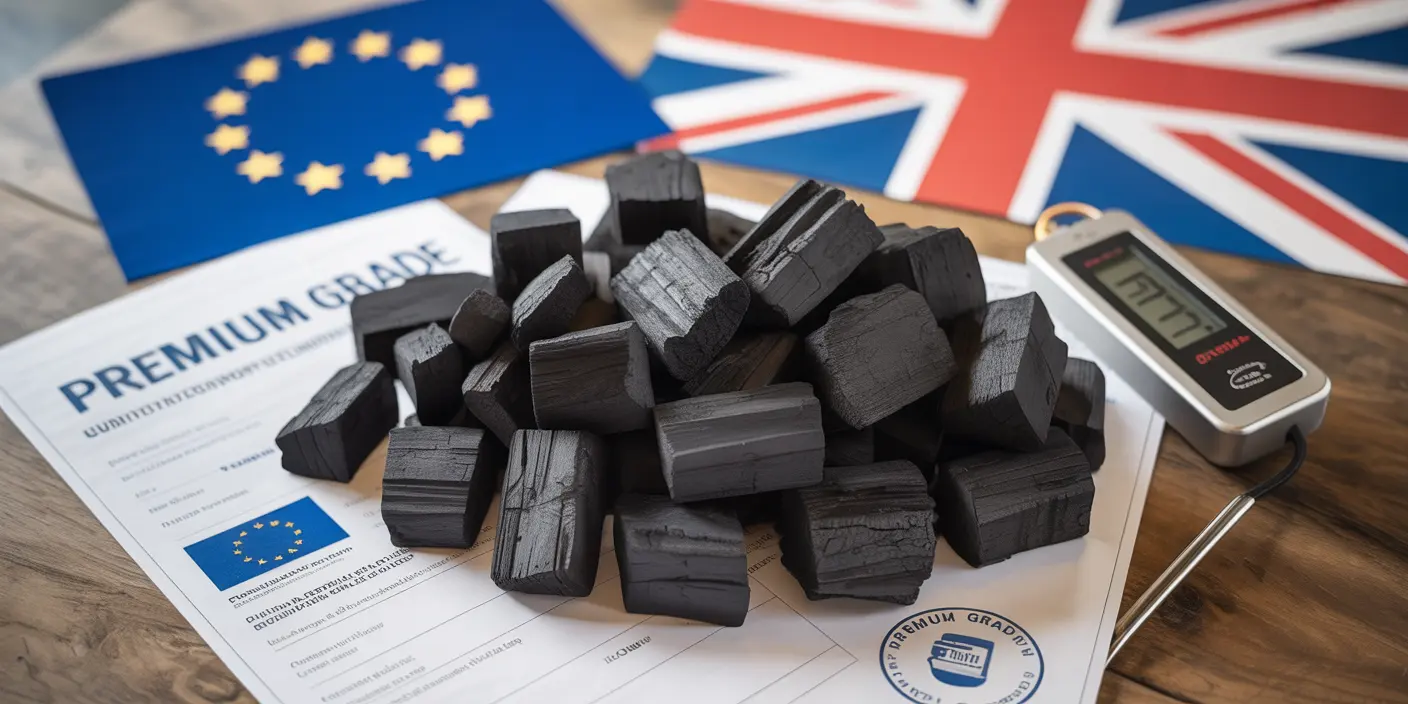
Quality Standards for Export-Ready Charcoal to the UK & EU: Complete Guide for Producers
Did you know the EU imported over 1.2 million tons of charcoal in 2023, with values exceeding €400 million? That’s a massive market opportunity, but here’s the kicker – roughly 15-20% of charcoal shipments get rejected at EU and UK ports every year because they don’t meet quality standards. I learned this the hard way when my first attempt at exporting charcoal to Germany ended with a container sitting in Hamburg for three weeks while customs officials picked apart every detail of my documentation.
Understanding quality standards for export-ready charcoal isn’t just about checking boxes on a form. It’s about protecting your investment, building long-term relationships with buyers, and honestly, saving yourself from the kind of sleepless nights I had when that first shipment was in limbo. The UK and EU markets are incredibly lucrative, but they’re also incredibly strict about what crosses their borders.
In this guide, I’m gonna walk you through everything you need to know about getting your charcoal export-ready for these markets. We’ll cover the physical properties your charcoal needs to have, the certifications you can’t skip, the testing methods that matter, and those annoying little details that can make or break your export business. Trust me, by the end of this, you’ll know exactly what it takes to get your product accepted without drama!
Understanding EU and UK Charcoal Quality Requirements
So here’s where things get interesting, and honestly a bit complicated. The EU and UK used to have identical standards when the UK was part of the European Union, but Brexit changed some things. Not everything, but enough to trip you up if you’re not paying attention.
The basic framework is still similar though. Both markets want charcoal that’s safe for consumers, doesn’t contribute to deforestation, and actually works well for its intended purpose (usually grilling or heating). The standards exist because back in the early 2000s, there were too many incidents of poor-quality charcoal causing accidents, excessive smoke complaints in residential areas, and environmental concerns about tropical hardwood being turned into BBQ fuel.
For the EU, you’re dealing with regulations that apply across all 27 member states. The European Standard EN 1860-2 covers grilling charcoal and briquettes specifically. Each member country might have additional requirements, but if you meet the EN standard, you’re mostly good to go. The UK still largely follows these same technical specifications even post-Brexit, but now you need separate documentation for UK shipments versus EU shipments.
The most common rejection reasons I’ve seen? Moisture content being too high (charcoal absorbed humidity during storage or transport), fixed carbon content below minimum thresholds, contamination with dirt or non-wood materials, and missing or incorrect certification documents. One time, I lost a £30,000 deal because the lab report I submitted was dated more than 60 days before the shipment date. The buyer wanted fresh testing results, and I didn’t know that was even a thing!
Another issue that catches people off guard is additives. EU and UK regulations are super strict about what can and cannot be added to charcoal. Basically, if you’re adding accelerants, binders, or any chemical substances, you need to declare them and prove they’re food-safe. Natural lump charcoal without additives has the easiest path to approval.
Essential Physical and Chemical Properties
Alright, this is where we get into the nitty-gritty technical stuff, but I promise to keep it simple. Your charcoal needs to hit certain numbers on lab tests, or it’s not getting through customs. Period.
Fixed carbon content is probably the most important metric. This tells you how much actual carbon is in your charcoal versus ash, moisture, and volatile compounds. For export to the EU and UK, you need minimum 75% fixed carbon content, though premium buyers often want 80% or higher. I remember testing some charcoal from a new kiln we built, and it came back at 68%. We thought it looked great – nice and black, good weight – but the numbers don’t lie. We had to adjust our carbonization process, running it hotter and longer to drive off more volatiles.

Moisture content should be between 3-8% maximum, with most buyers preferring under 5%. Here’s a mistake I made early on: I’d test my charcoal right after production when moisture was around 4%, then package it, and by the time it sat in a warehouse for a few weeks, it had absorbed moisture from the air and climbed to 9%. Failed inspection. Now I always dry my charcoal to around 2-3% knowing it’ll absorb a bit before it ships.
Ash content needs to be under 5% for premium grades, though up to 8% is acceptable for standard grades. Lower ash content means your charcoal burns cleaner and leaves less mess. The ash content is largely determined by your raw material and how well you screen out dirt and bark before carbonization.
Volatile matter should be less than 20%, preferably under 15%. High volatile matter means your charcoal will spark, pop, and smoke excessively. Nobody wants that when they’re grilling steaks in their backyard! This is controlled by your carbonization temperature and time – you need to reach at least 450°C and hold it long enough to drive off the volatiles.
Calorific value (heating value) needs to be minimum 28-30 MJ/kg (megajoules per kilogram). This measures how much heat energy your charcoal produces. Higher is better. Premium restaurant-grade charcoal often hits 32-33 MJ/kg.
The density and hardness matter too, though these don’t always have strict numerical requirements. Charcoal that’s too soft crumbles during shipping and handling, creating dust and small pieces that are useless. There’s a simple drop test where you drop pieces from 2 meters onto concrete – they shouldn’t shatter into dust.
Size, Shape, and Packaging Standards
You’d think charcoal is just charcoal, right? Nope! The EU and UK markets are picky about how your product looks and how it’s packaged.
For lump charcoal, the typical size range is 20-80mm for retail products, though larger restaurant-grade pieces can go up to 120mm. The key is consistency. Buyers don’t want 50% dust and tiny fragments mixed with a few giant chunks. I usually aim for at least 80% of my charcoal falling within the 30-70mm range, with less than 10% fines (pieces under 20mm) and less than 10% oversized pieces.
Briquettes have more specific dimension requirements since they’re manufactured to uniform sizes. Common sizes are 50mm diameter cylinders or pillow-shaped pieces around 60x40mm. The important thing is that they’re consistent and don’t crumble easily.
Packaging is where a lot of exporters cut corners and regret it later. The EU requires that retail packaging clearly displays:
- Net weight in kilograms (not just pounds)
- Product name and grade
- Country of origin
- Any certifications (FSC, organic, etc.)
- Safety warnings if applicable
- Manufacturer or importer contact information
- Batch or lot number for traceability
I once shipped 500 cartons with labels that listed weight in pounds only. The distributor made me relabel every single box before they’d accept delivery. Cost me three days and about £2,000 in labor.
For bulk exports, you’ll typically use large polypropylene bags (15-25kg) or even bigger bulk bags (500-1000kg). The bags need to be sturdy, waterproof, and clearly marked. Palletization is usually required, with shrink-wrapping or stretch film to secure everything.
One thing that surprised me was the weight accuracy requirement. EU regulations allow only small variations from the stated net weight – usually within 3% for packages under 50kg. You need decent scales and quality control during packaging. I’ve seen shipments rejected because random spot checks showed packages averaging 8-10% underweight.
Required Certifications and Documentation
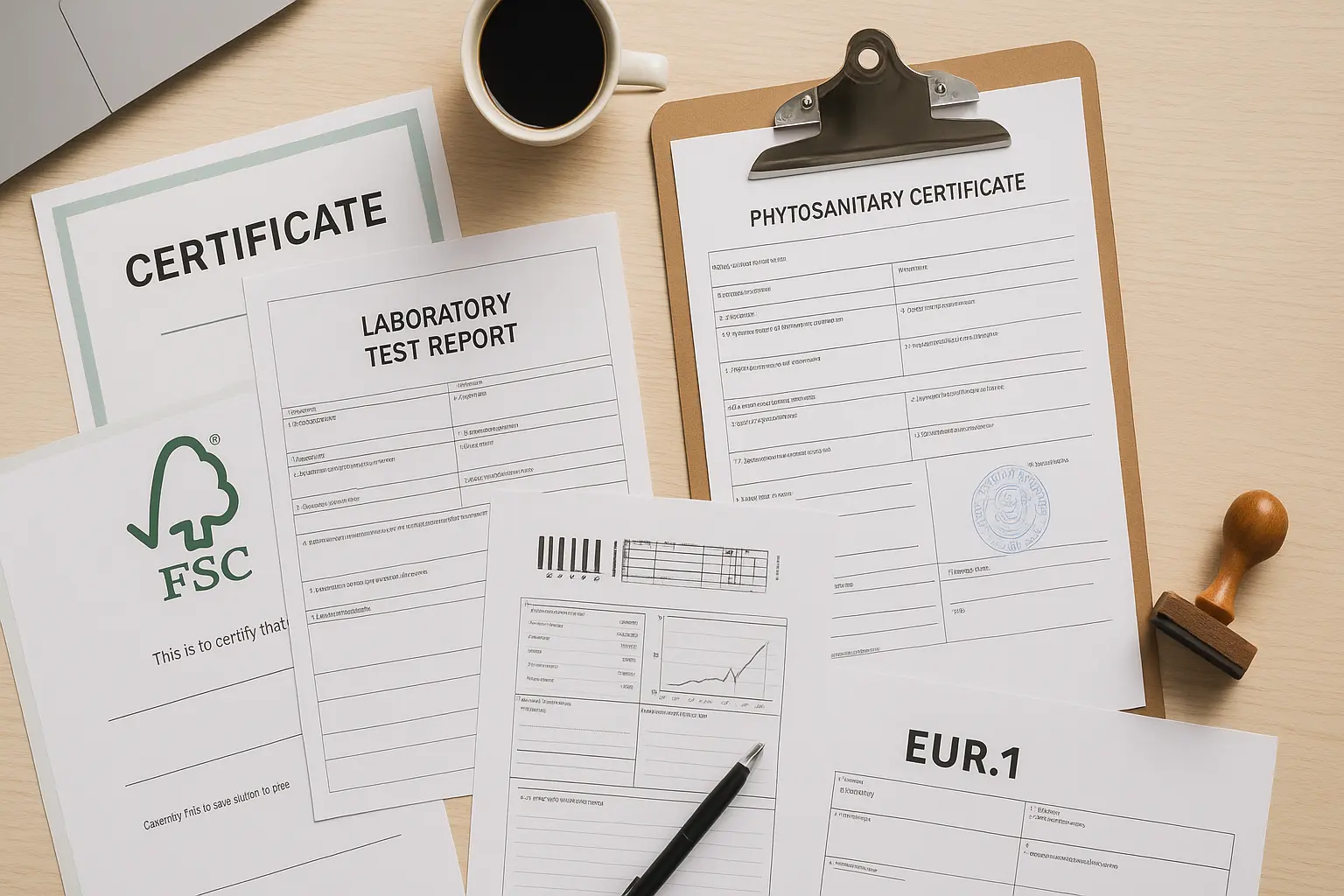
Oh boy, this section could be a whole article by itself! The paperwork for exporting charcoal to the EU and UK is no joke. Missing even one document can hold up your shipment for weeks.
FSC Certification (Forest Stewardship Council) isn’t technically mandatory for all charcoal, but good luck finding serious buyers without it. FSC certifies that your wood comes from responsibly managed forests. Getting FSC-certified was one of the best business decisions I made, even though the initial audit process was stressful and expensive (cost me about $8,000 for the first certification). Now my buyers trust that I’m not contributing to illegal logging.
REACH compliance is required for the EU market. REACH stands for Registration, Evaluation, Authorization, and Restriction of Chemicals. For charcoal, this mainly means declaring any substances used in production and ensuring nothing hazardous is present above threshold levels. If you’re producing natural lump charcoal with no additives, REACH compliance is straightforward, but you still need documentation proving it.
Phytosanitary certificates are issued by your country’s agricultural or forestry department. They certify that your wood products are free from pests and diseases. Every shipment needs one, and they have to be issued within a specific timeframe before export (usually 14 days). I’ve literally driven four hours to the capital city at the last minute to get one of these certificates because the local office was closed.
Certificate of Origin proves where your charcoal was manufactured. Many countries have preferential trade agreements with the EU or UK that reduce or eliminate import duties. Make sure this certificate is accurate and matches your commercial invoice exactly. Any discrepancies will cause delays.
Quality test reports from an accredited laboratory are essential. These should show all the physical and chemical properties I mentioned earlier. The reports need to be recent (usually within 60-90 days of shipment) and from a lab that’s recognized internationally. ISO 17025 accreditation for the lab is the gold standard.
EUR1 or other trade documents might be needed depending on your country’s trade agreements with the EU. These help you qualify for reduced tariffs. Check with your local chamber of commerce or export promotion agency about what trade documents apply to your situation.
The documentation is honestly the most frustrating part of exporting charcoal. But once you’ve done it a few times and built relationships with the right government offices, it gets easier. I keep templates of everything now and a checklist that I go through for every single shipment.
Testing Methods and Quality Control
Testing your charcoal isn’t optional – it’s absolutely mandatory if you want to export to the UK and EU. And not just any testing will do; you need to follow internationally recognized standards.
The main testing standards you’ll encounter are ISO (International Organization for Standardization), DIN (German Institute for Standardization), and ASTM (American Society for Testing and Materials). For European markets, ISO and DIN standards are most commonly required. Specifically, ISO 17225-1 covers solid biofuels including charcoal.
Here’s what a typical testing process looks like. You take representative samples from your production batch – and I mean truly representative, not just the best-looking pieces! The sampling protocol usually requires taking samples from multiple locations within your batch (top, middle, bottom of containers or piles). I made the mistake once of only sampling from the top layer where the charcoal looked perfect. The lab’s inspector came to witness the sampling and immediately called me out on it. Had to redo the whole thing properly.
Sample size matters too. For a 20-ton container, you typically need to collect at least 5-10kg of sample material, which then gets homogenized and reduced down to smaller lab samples. The lab will test for all those parameters I mentioned earlier: fixed carbon, moisture, ash, volatiles, calorific value, and sometimes additional tests for heavy metals or contaminants.
Third-party inspection services are super valuable, especially when you’re starting out. Companies like SGS, Bureau Veritas, and Intertek will inspect your production facility, witness the sampling, and supervise loading. It costs money (usually $500-2000 per inspection depending on location and scope), but having their report basically guarantees your buyer that what you’re shipping matches what you’re claiming.
I use a local laboratory that’s ISO 17025 accredited for routine testing, and I test every production batch. No exceptions! Even if everything looked perfect the last ten times, batch eleven might have an issue. Maybe the wood supplier gave you different species, maybe humidity was higher during carbonization, maybe something contaminated the batch. Testing catches problems before they become expensive disasters.
Documentation of test results is crucial. I keep a file for every batch with the date, kiln number, wood source, carbonization conditions, and the lab results. This traceability has saved me multiple times when buyers asked questions about specific shipments months after delivery.
Environmental and Sustainability Requirements
This is where charcoal exports have gotten much more complicated in recent years, and honestly, it’s only going to get stricter. The EU and UK are super serious about environmental protection and climate change.
Sustainable sourcing is no longer just a nice-to-have – it’s becoming legally required. The EU Deforestation Regulation (EUDR), which fully kicks in at the end of 2024 and into 2025, requires that charcoal imported into the EU be deforestation-free and legally produced. This means you need to prove that your wood raw materials didn’t come from land that was deforested after December 2020.
Implementing EUDR compliance has been a headache, not gonna lie. You need geo-coordinates for all your wood sources, documentation of land use history, and proof that everything was legally harvested. I’ve had to work closely with my wood suppliers to map out their forest plots and collect all this information. The traceability requirements are intense – you need to be able to trace every batch of charcoal back to specific forest locations.
Carbon footprint is increasingly important to buyers, even if it’s not yet a hard regulatory requirement. Some UK supermarket chains are asking suppliers to calculate and report the carbon emissions associated with production and transport. I partnered with an environmental consultant to do this analysis for my operation. Turned out my emissions were pretty reasonable, and now I use that as a marketing advantage.
Banned wood species is something you absolutely must know. Certain tree species are protected under CITES (Convention on International Trade in Endangered Species) or other regulations. Using these species for charcoal is illegal and will get your entire shipment confiscated. Common tropical hardwoods like certain rosewoods, ebony, and some mahogany species are restricted. I stick to commonly available, fast-growing species like acacia, eucalyptus, and oak to avoid any issues.
The traceability requirements extend through your entire supply chain. You need records showing where wood came from, when it was harvested, how it was transported, how it was processed, and how the final product was packaged and shipped. Blockchain-based traceability systems are starting to appear in the industry, which honestly sounds fancy but basically just means better documentation and record-keeping.
One thing I’ve learned: don’t cut corners on environmental compliance. The regulations will only get stricter, and buyers are increasingly unwilling to work with suppliers who can’t prove sustainability. It’s better to invest in proper systems now than to scramble later when requirements tighten.
Common Quality Defects That Cause Rejection
Let me tell you about the mistakes that’ll cost you money and reputation. I’ve seen (and made) most of these errors at some point, and they’re all avoidable with proper quality control.
Excessive smoke production is probably the number one complaint about low-quality charcoal. When charcoal smokes heavily during burning, it’s usually because the carbonization wasn’t complete – too much volatile matter remaining. I had a batch that tested acceptable on paper (19% volatiles, just under the 20% limit), but customers complained it smoked like crazy. Turned out the volatiles were concentrated in certain pieces that didn’t get fully carbonized. Now I aim for under 15% volatiles to have a safety margin.
High spark and pop characteristics happen when your charcoal contains moisture pockets, air pockets, or volatile pockets that literally explode when heated. It’s dangerous (sparks flying at people) and annoying (burning holes in clothes and furniture). This is usually caused by carbonizing wood that wasn’t dry enough before processing, or not reaching high enough temperatures during carbonization. I’ve learned to pre-dry wood to under 20% moisture before it goes into the kiln.
Contamination issues are embarrassing and completely avoidable. I’m talking about dirt, rocks, pieces of plastic or metal, or even animal droppings getting mixed into your charcoal. It happens more often than you’d think, especially if you’re handling material on the ground or in dirty areas. One time I found a piece of wire in a bag during a random quality check – it had somehow gotten mixed in during screening. That whole batch got re-screened. Now we use metal detectors for final packaged product, especially for premium grades.
Inconsistent burning time frustrates customers more than almost anything. If some pieces burn for 90 minutes and others burn for 30 minutes, people feel cheated. This inconsistency usually comes from mixing charcoal from different wood species or different carbonization batches. Each species and each batch has slightly different density and composition. I try to keep batches separate and label them, so I’m not mixing oak charcoal from one kiln with acacia from another.
Unacceptable odors or additives will get your product blacklisted fast. Natural charcoal should smell like wood smoke when burning – pleasant and mild. If it smells like chemicals, petroleum, or anything funky, that’s a problem. Some producers add accelerants or binders without proper disclosure, which is not only dishonest but potentially dangerous. I once bought charcoal from another producer to resell (before I had enough production capacity), and customers complained it smelled like diesel. Turned out the producer was using diesel to start his kilns and it was contaminating the charcoal. Never worked with that supplier again.
Another defect worth mentioning is excessive dust and fines. If 20-30% of your packaged product is tiny pieces and dust, customers rightfully feel ripped off. This usually happens from poor handling practices – dropping bags, rough transport, or packaging charcoal that’s too soft and fragile. Better carbonization (hotter, longer) produces harder charcoal that’s more resistant to breaking.
Storage and Transportation Standards
Getting your charcoal made to perfect specifications is only half the battle. You can ruin months of good production with poor storage or transportation practices.
Proper storage conditions are critical because charcoal is hygroscopic – it absorbs moisture from the air. I learned this the expensive way when I stored 10 tons of perfectly good charcoal (3% moisture content) in an un-covered area during rainy season. Three weeks later, it was at 11% moisture and unsellable for export. Now all my finished charcoal is stored in covered warehouses with good ventilation but protection from rain.
Temperature fluctuations can cause condensation inside bags, which increases moisture content. If possible, store charcoal in climate-controlled conditions, or at least in buildings that don’t experience huge day-night temperature swings. I use pallet racking to keep bags off the floor, which improves air circulation and prevents ground moisture from wicking up into the bottom layers.
Container specifications for shipping matter too. Standard 20-foot or 40-foot dry containers are typical, but they need to be clean and dry. I always inspect containers before loading – you’d be surprised how often containers have moisture, rust, chemical residues, or holes. One time I loaded a container that had previously carried fish meal, and even though it was supposedly “cleaned,” the smell was still there. Had to unload everything and get a different container.
Humidity control during shipping is tricky because you’re often moving charcoal from tropical production areas to temperate European climates. The temperature gradient can cause condensation. Using desiccant bags inside the container helps absorb moisture. I typically use 20-30 kg of container desiccant bags per 40-foot container, hung from the ceiling or placed strategically between pallets.
Proper loading and securing prevents damage during ocean transport. Containers get tossed around on ships, especially in rough seas. I’ve received reports of completely collapsed loads where improper securing caused bags to tumble and burst. Now we use load bars, stretch wrap around palletized loads, and sometimes airbags to fill empty spaces and prevent shifting.
One thing that’s often overlooked is ventilation. While you want to keep moisture out, you also don’t want to seal everything so tightly that any moisture present can’t escape. Some producers use breathable bags or bags with small vent holes. It’s a balancing act, honestly.
Transit time matters more than people realize. The longer charcoal sits in a container, the more opportunity for problems. I try to book direct shipments rather than routes that require trans-shipment and extra handling. A 30-day direct voyage from my port to Hamburg is better than a 45-day journey with stops in two other ports.
And here’s something that caught me off guard initially: temperature regulations for certain destinations. Some buyers specify maximum temperature limits for storage and transport, especially for charcoal destined for food contact use. Excessive heat can cause some chemical changes that affect burning characteristics.
Conclusion
Whew! That was a lot of information, but honestly, this stuff is crucial if you’re serious about exporting charcoal to the UK and EU markets. These aren’t just random hoops to jump through – they’re standards that protect consumers, ensure fair trade, and preserve our forests for future generations.
The key takeaway here is that quality can’t be an afterthought. You need to build quality control into every step of your process, from sourcing raw materials to the moment your product arrives at your buyer’s warehouse. Yes, it requires investment in testing, certification, proper equipment, and documentation systems. But the payoff is access to premium markets that pay fair prices and build long-term relationships with reliable suppliers.
My biggest piece of advice? Start with the end in mind. Know exactly what specifications your target buyers require before you produce a single kilogram of charcoal. Get your testing and certification systems in place early. Build relationships with freight forwarders and customs brokers who know the charcoal business. And don’t try to cut corners – the savings aren’t worth the risk of rejected shipments.
Regulations are constantly evolving, especially around environmental sustainability and traceability. What’s acceptable today might not be tomorrow, particularly with EUDR and climate-related requirements tightening. Stay informed by joining industry associations, following updates from EU and UK regulatory bodies, and maintaining close communication with your buyers about changing requirements.
Every producer’s situation is different – the wood species available in your region, your production capacity, your proximity to ports, your access to certification bodies. Take the framework I’ve shared here and adapt it to your specific circumstances. Maybe you need to focus more on FSC certification, or maybe your challenge is laboratory testing access. Prioritize the areas where you’re weakest and work systematically to strengthen them.
I’d love to hear about your experiences exporting charcoal or working to meet these standards! What’s been your biggest challenge? Have you found any clever solutions to compliance issues that might help other producers? Drop your thoughts in the comments below – this industry thrives when we share knowledge and help each other succeed. And if you’re just starting your export journey, feel free to ask questions. We’ve all been there, and the charcoal community is generally pretty helpful once you show you’re serious about doing things right!