A held container doesn’t announce itself politely. It shows up as a terse email from your freight forwarder, a production line running low on raw material, and a customer asking why their order is three weeks late. If you’re a procurement or supply chain manager sourcing cashew nuts, soyabeans, sesame seeds, cocoa, ginger, shea butter, hibiscus or charcoal from Africa into the UK or EU, this is the article for the moment before that email arrives — not after.
Most shipment rejections at UK and EU ports aren’t caused by bad product. They’re caused by a documentation and specification gap that formed weeks earlier, usually at the point where a buyer trusted a supplier’s self-reported numbers instead of verifying them. That gap is also where the difference between direct sourcing and buying through a middleman becomes commercially real, not theoretical.
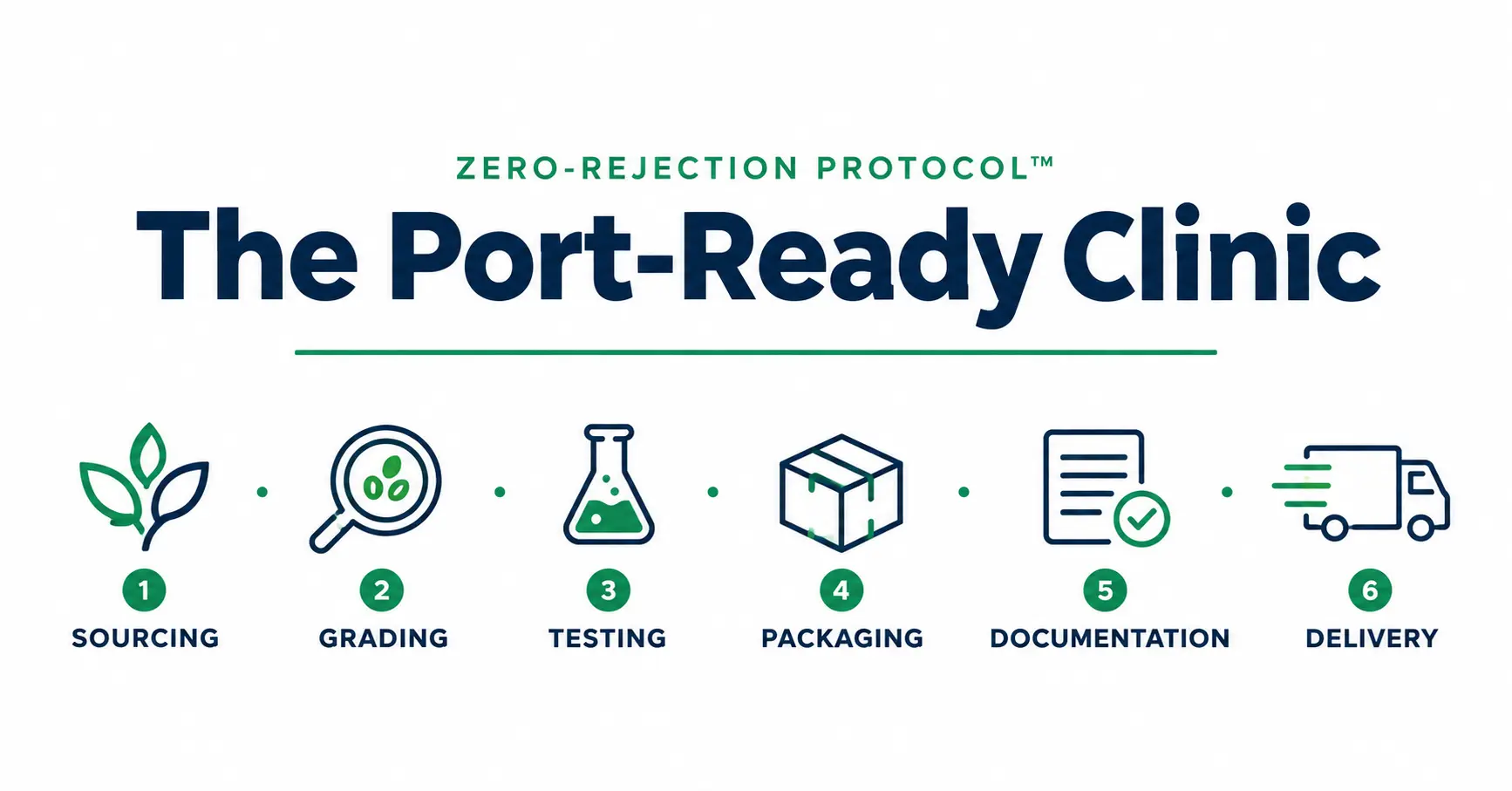
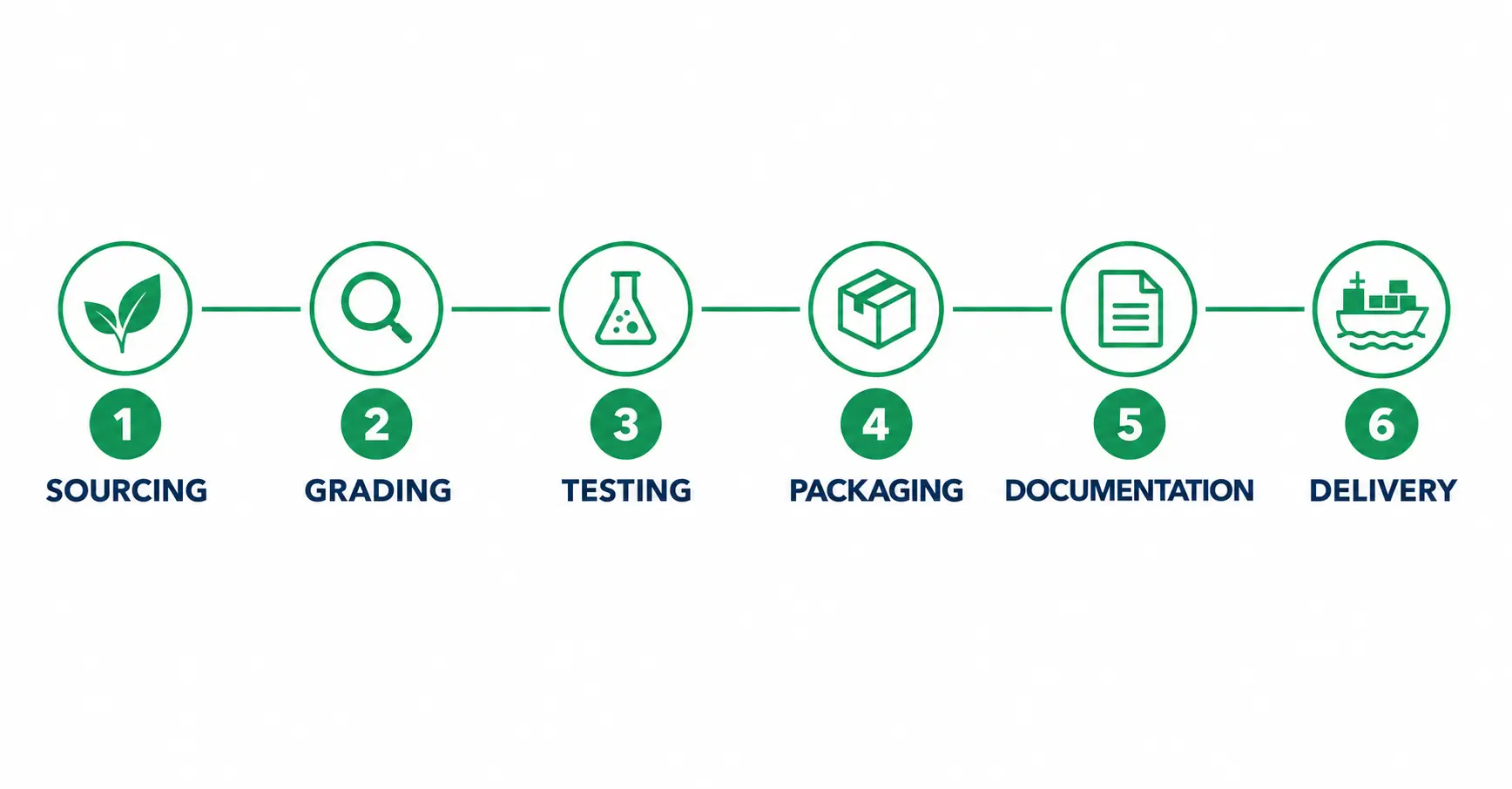
We run BV Integrated’s own sourcing and export operations under what we call the Zero-Rejection Protocol™ — six checkpoints (Sourcing → Grading → Testing → Packaging → Documentation → Delivery) built specifically to close that gap before a container ever reaches a port. This article walks through what actually causes rejections, where buyers unknowingly add risk to their own sourcing process, and what a genuinely compliant shipment requires — so you can evaluate any supplier, including us, against a real standard instead of a sales pitch.
Why Do African Commodity Shipments Get Held at Customs?
African commodity shipments are most often held at UK or EU customs because of a mismatch between declared documentation and what inspectors find on physical or laboratory verification — not because the underlying product is unsafe. Common triggers include missing or incomplete phytosanitary certificates, moisture or aflatoxin levels outside the declared range, and inconsistent Certificates of Origin.
This matters because customs and port health authorities aren’t grading your product against “good” or “bad.” They’re checking whether what arrives matches what was declared on paper. A shipment of sesame seed can be perfectly edible and still get flagged if its phytosanitary certificate lists the wrong consignment weight, or if a pesticide residue result wasn’t tested against the specific EU maximum residue limit (MRL) that applies to that product category.
This is where sourcing structure starts to matter. A middleman sourcing model — where a buyer purchases through a trading intermediary who aggregates product from multiple unverified farms or depots — multiplies the number of points where a document can drift from the physical goods. Each hand-off is a place where a batch gets mixed, a certificate gets reused, or a spec sheet gets copied forward without re-testing. Direct sourcing, where the exporter controls grading, testing and documentation from farmgate or depot through to the port, removes several of those hand-offs entirely. It doesn’t eliminate risk — nothing does — but it shortens the chain of custody a buyer has to trust blindly.
For UK-bound shipments, the relevant control points sit under the Border Target Operating Model and the guidance the Animal and Plant Health Agency (APHA) publishes for high-risk food and feed of non-animal origin. For EU-bound shipments, the equivalent sits with the European Commission’s plant health and biosecurity rules, which apply the same phytosanitary logic to any non-EU country, Great Britain included since January 2021. Both systems are checking documentation-to-cargo consistency first, and product quality second.

What Actually Happens Before a Shipment Is Flagged
A compliance gap almost never forms at the port. It forms at the sourcing or grading stage, days or weeks earlier, and stays invisible until a sample is actually tested. By the time a container is sitting at a UK or EU border inspection post, the gap has already existed through farmgate collection, bulking, grading and loading — the inspection just makes it visible.
Here’s what that looks like in practice. A buyer receives a spec sheet from a supplier: moisture content 8%, foreign matter under 1%, kernel count within a defined range for cashew, aflatoxin below the regulatory threshold for the destination market. That spec sheet is usually accurate for the sample the supplier tested — the problem is what happens between that sample and the full container.
Raw agro-commodities move through multiple collection points before export, especially when sourced via aggregators or middlemen buying from many smallholder farms. A single container of sesame seed or cashew can combine product from dozens of farms, harvested weeks apart, stored under different conditions. Unless every batch going into that container is graded and tested — not just a representative sample pulled once at the start — the finished container can drift meaningfully from the spec sheet the buyer was shown. This is what the trade calls spec drift, and it is rarely intentional fraud. It’s usually the predictable result of a supply chain with no single party accountable for consistency across the whole batch.
The gap between what’s on a spec sheet and what’s tested batch-by-batch is the single biggest reason a shipment that “looked fine on paper” fails inspection on arrival. A rejection is rarely about the commodity itself being unsellable — it’s about the documentation not reflecting the actual, tested condition of the goods inside that specific container, on that specific day.
This is also where direct sourcing changes the risk profile measurably. When an exporter controls collection, grading and testing directly — rather than buying an already-aggregated, already-mixed lot from a middleman — there is one party accountable for consistency across the full container, and testing happens close to the point of aggregation rather than being inferred from an earlier sample.
What Buyers Do That Increases Their Own Risk (Without Realising)
Most first-time importers don’t create risk deliberately — they simply haven’t been shown what a sourcing process should include, because they often inherited a supplier relationship rather than building one from scratch. A few patterns show up repeatedly in shipments that get flagged, and all of them are fixable before the next order ships.
Accepting a supplier’s self-reported spec without third-party verification. A spec sheet produced by the seller, about their own product, is a starting point for negotiation — not proof of compliance. An independent inspection report from a body like SGS or Bureau Veritas, drawn on a sample taken at or near loading, is a different category of evidence entirely.
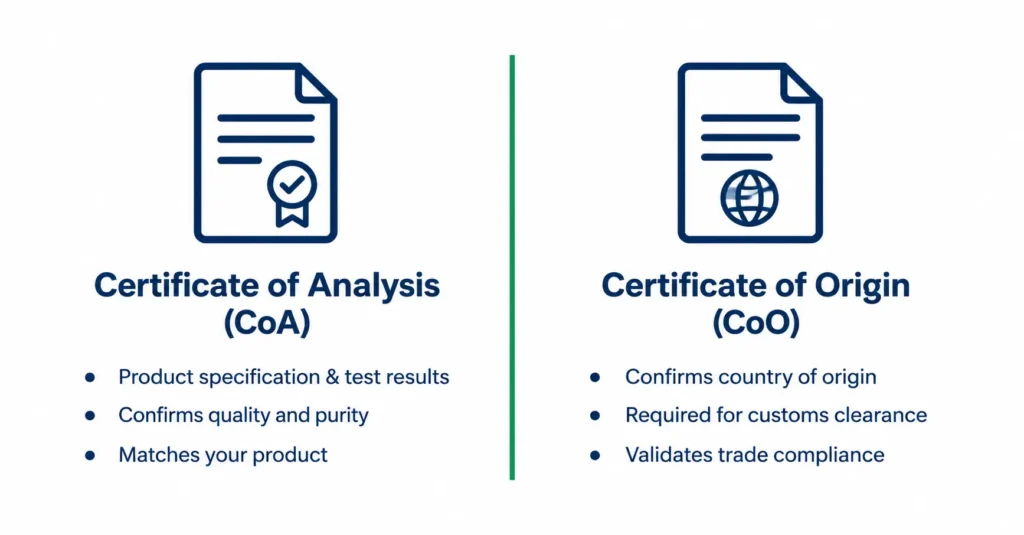
Treating “Certificate of Origin” and “Phytosanitary Certificate” as interchangeable. They answer different questions. A Certificate of Origin confirms where the goods were produced, for tariff and trade-agreement purposes. A Phytosanitary Certificate confirms the goods have been inspected and are free from regulated pests, issued by the exporting country’s plant protection authority — NAQS, in Nigeria’s case. Missing either one, or assuming one covers the other, is one of the most common reasons for a customs hold.
Not asking which laboratory ran the aflatoxin or pesticide residue test, or when. A test result with no date, no accredited lab named, and no link to the specific container being shipped is difficult for a buyer to rely on, and difficult for an inspector to accept at face value.
Buying through a chain where no single party can answer for the full batch. If a question comes up about a specific pallet’s moisture reading, the buyer needs to know who can answer it — and how quickly. In a long middleman chain, that answer can take days, by which point demurrage is already accruing.
Assuming packaging and labelling are a formality. Jute bag integrity, correct net-weight labelling, and batch-traceable markings are part of what inspectors check. A product that passes on quality can still be flagged on packaging non-conformance.
None of this means a buyer needs to become an export compliance expert. It means asking a short, specific set of questions before confirming an order — which is exactly what the checklist below is for.
What a Fully Compliant Shipment Actually Requires
A fully compliant shipment requires verified consistency at six points — sourcing, grading, testing, packaging, documentation and delivery — not just a clean-looking spec sheet. Each stage needs its own evidence: traceable sourcing records, batch-level grading, accredited lab testing, conformant packaging, and a documentation set that matches the specific container being shipped.
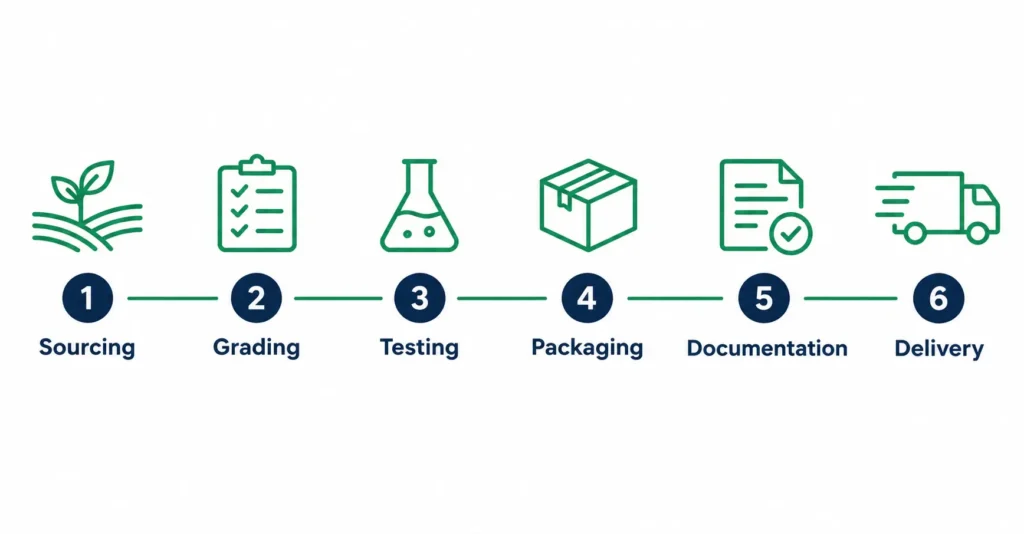
This is the structure we run internally as the Zero-Rejection Protocol™, and it’s worth naming the actual certificates and checkpoints involved rather than describing them vaguely, because specificity is what lets a procurement manager actually verify a supplier against it.
Sourcing. Traceable origin back to named farms, cooperatives or licensed buying agents — not an anonymous aggregated lot. Direct sourcing means the exporter, not an intermediary, controls this stage.
Grading. Batch-by-batch grading against the agreed contract specification (moisture, foreign matter, defect count, kernel size or outturn ratio, depending on commodity), not a single sample assumed to represent the whole container.
Testing. Independent laboratory testing for aflatoxin, pesticide residues and microbiological safety, tied to the specific consignment and dated close to loading. For EU-bound shipments, residue limits are checked against the applicable Codex Alimentarius and EU maximum residue levels, which can differ by product and destination.
Packaging. Conformant, correctly labelled packaging — food-grade jute or PP bags, correct net-weight marking, batch and lot traceability printed on the bag — checked as part of the same pre-shipment inspection as the product itself.
Documentation. The full set, matched to the actual cargo: Certificate of Origin, Phytosanitary Certificate issued by NAQS, SGS or equivalent inspection report, commercial invoice and packing list with consistent weights and figures, and any destination-specific health certificate the importing country requires.
Delivery. Container loading and sealing documented and photographed, with the seal number matching the bill of lading — the last point where a discrepancy can be caught before the vessel sails.
The commercial case for getting this right isn’t abstract. A held container accrues demurrage daily, and a delayed raw-material delivery can stall a production line that was scheduled around the original arrival date. Verifying compliance before shipment costs a fraction of what resolving a rejection at the port costs — in money, time, and the supplier relationships affected downstream. If you want to see how this protocol applies to a specific commodity and contract volume, our team can walk through it against your sourcing requirements — get a quote with your specification and we’ll tell you exactly what documentation and testing it calls for.
A Practical Pre-Shipment Checklist
Use this to check your current supplier relationship today — whether you’re sourcing through BV Integrated or anyone else. This is a risk-reduction checklist, not a guarantee: no process removes 100% of shipment risk, but each item below closes a specific, known gap.
- Confirm who controls grading and testing. Ask directly whether your supplier sources directly from farms/depots, or buys from a middleman aggregator. Ask who is accountable if a batch fails testing.
- Request an independent inspection report, not just a spec sheet. Ask which body performed it (SGS, Bureau Veritas, or equivalent), when, and on which specific lot.
- Verify the Phytosanitary Certificate will be issued by the correct authority (NAQS for Nigerian-origin goods) and matches the consignment weight and description on the commercial invoice.
- Confirm aflatoxin and pesticide residue testing is referenced to your destination market’s limits — UK and EU thresholds aren’t always identical to other markets.
- Check packaging specification in writing — material, net weight, batch marking — before loading, not after.
- Ask for photographic documentation of container loading and sealing, with the seal number cross-checked against the bill of lading.
- Confirm the Certificate of Origin and Phytosanitary Certificate are separate, both present, and both reference the same consignment.
- Build in a buffer for first-time orders with a new supplier or new commodity, rather than scheduling production around the earliest possible arrival date.
If any of these questions don’t have a clear, specific answer, that’s the gap to close before the next shipment — not after it’s held. Request a quote from BV Integrated and we’ll show you exactly how each of these points is handled for your commodity and volume.
Frequently Asked Questions
What’s the difference between direct sourcing and buying through a middleman when importing from Africa?
Direct sourcing means the exporter controls collection, grading, testing and documentation from the farm or depot through to the port. Buying through a middleman means an intermediary aggregates product from multiple unverified sources first, adding hand-offs where specifications can drift before a buyer ever sees the goods.
Why do shipments from Africa get held at UK or EU customs?
Most holds happen because documentation doesn’t match what’s physically verified on the shipment — missing or inconsistent phytosanitary certificates, residue test results outside the applicable limit, or packaging that doesn’t match the declared specification. The product itself is rarely the sole cause.
What is a Phytosanitary Certificate and who issues it for Nigerian exports?
A Phytosanitary Certificate confirms agricultural goods have been inspected and are free of regulated pests and diseases. For Nigerian-origin exports, it’s issued by the Nigeria Agricultural Quarantine Service (NAQS) after inspection, and it’s required for customs clearance in both the UK and EU.
Is a Certificate of Origin the same as a Phytosanitary Certificate?
No. A Certificate of Origin confirms where goods were produced, mainly for tariff and trade-agreement purposes. A Phytosanitary Certificate confirms pest and disease inspection. Both are usually required, and missing either one can cause a customs hold.
What does an SGS or Bureau Veritas inspection report actually verify?
An independent pre-shipment inspection verifies quantity, packaging and marking conformance, and draws samples for quality testing against the contract specification — separate from, and more reliable than, a supplier’s self-reported spec sheet.
What causes aflatoxin levels to vary between a spec sheet and the actual shipment?
Aflatoxin risk builds during storage and handling, particularly with uneven moisture or delayed processing after harvest. A single early sample can understate the risk in a full container if later-collected batches weren’t tested separately.
How much does demurrage typically cost when a shipment is held?
Demurrage charges vary by port, shipping line and container type, and accrue daily once free time expires — so even a short hold adds real, ongoing cost. Your freight forwarder or shipping line can confirm the exact daily rate that applies to your specific contract.
Can a shipment be guaranteed to pass UK or EU customs inspection?
No reputable exporter can guarantee zero rejection, because final inspection authority sits with customs and port health officials, not the exporter. What a structured process like the Zero-Rejection Protocol™ does is close the known, verifiable gaps that cause most holds — reducing risk, not eliminating it entirely.
What should a first-time importer ask a new African commodity supplier before placing an order?
Ask who controls grading and testing (direct sourcing vs a middleman chain), request an independent inspection report rather than a self-reported spec sheet, and confirm which specific certificates — Certificate of Origin, Phytosanitary Certificate, lab test report — will accompany the consignment.
Which African commodities are most at risk of customs rejection in the UK and EU?
Commodities with aflatoxin-sensitive profiles — cashew nuts, sesame seeds, soyabeans and groundnuts — see frequent residue and moisture-related holds. Cocoa and shea butter face additional scrutiny under food-safety and contaminant rules specific to those product categories.