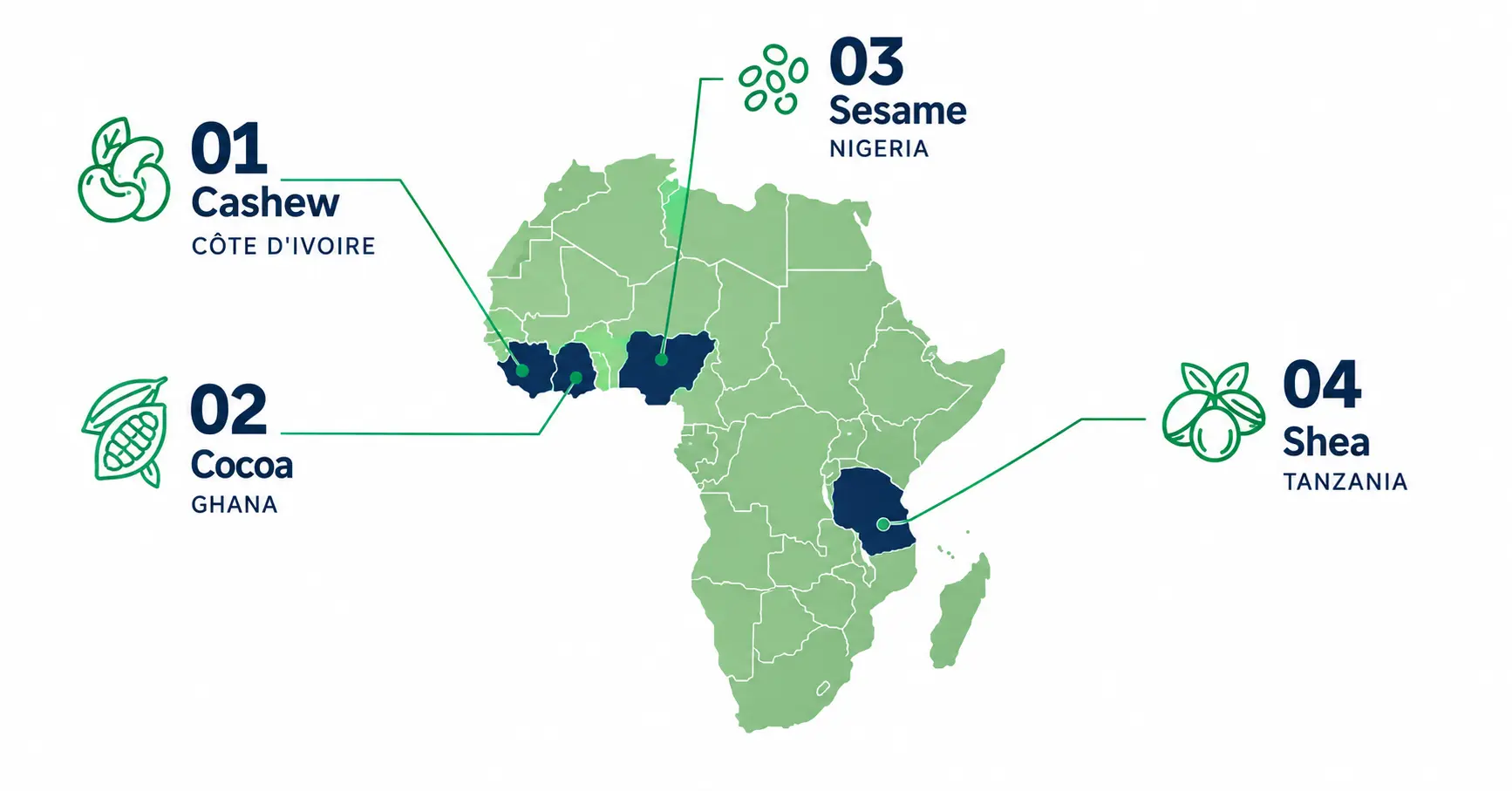
A container is sitting at the port. Your production line needs the raw material inside it in six days. Customs has flagged the shipment for a documentation review, nobody can tell you when it will clear, and the supplier who sold you the commodity has gone quiet. If that scenario feels familiar, this guide is for you — procurement and supply chain managers at UK and EU food manufacturers and importers who source raw agro-commodities from Africa: cashew nuts, soyabeans, sesame seeds, cocoa, ginger, shea butter, hibiscus flower, and charcoal.
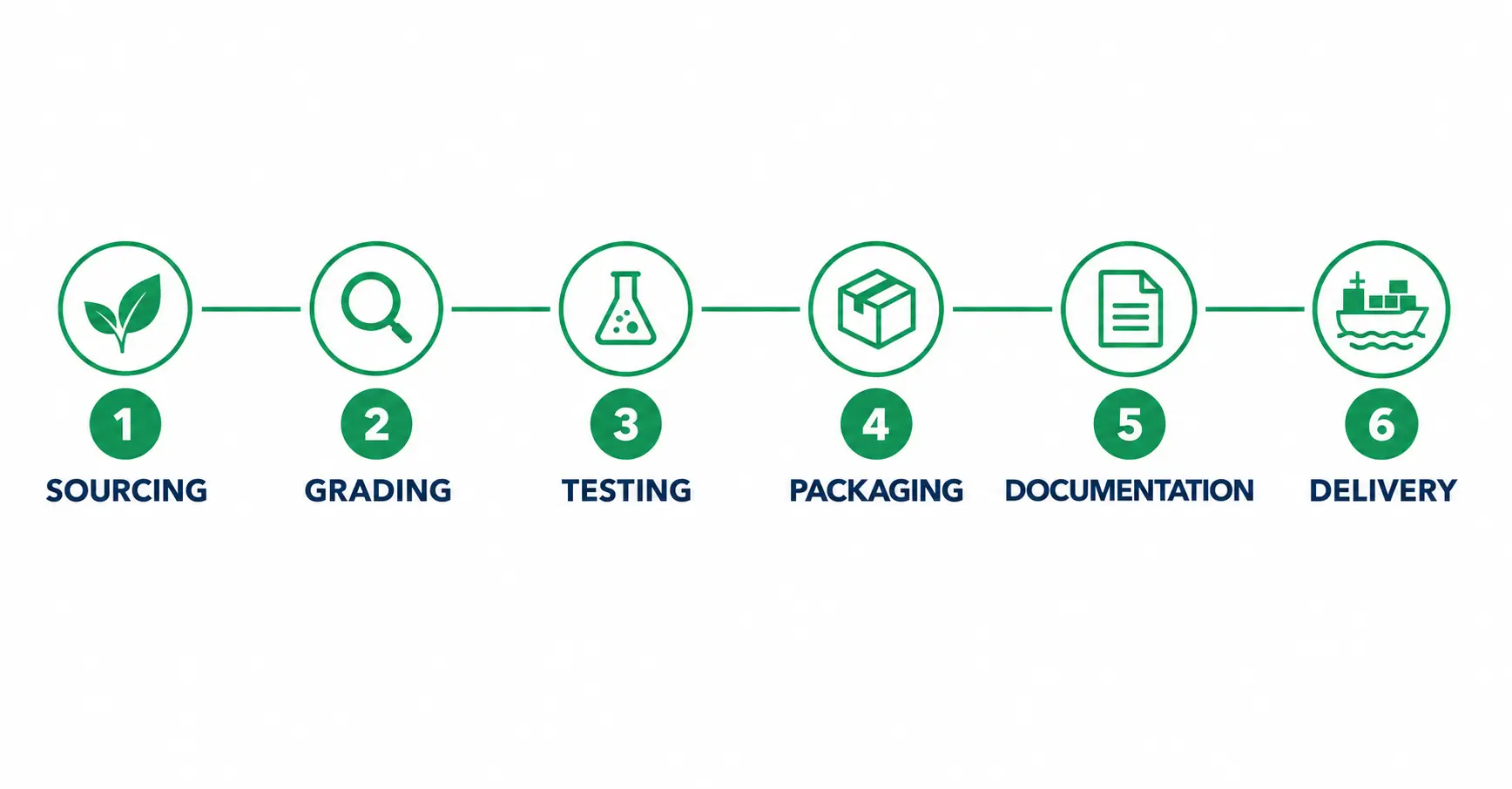
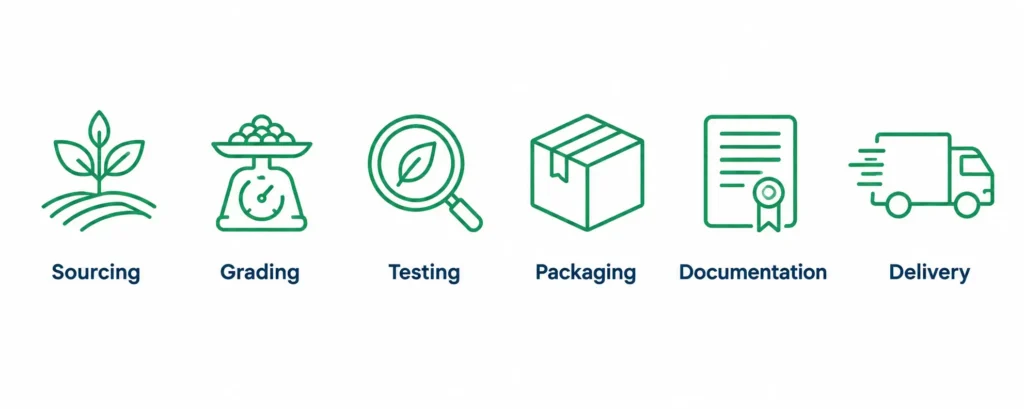
Commodity import risk is not rare. It is a routine cost of doing business across UK and EU import lanes, and it rarely comes from bad intentions — it comes from gaps between what a spec sheet says and what a batch actually contains by the time it reaches your port. At BV Integrated, we run every export shipment through a six-stage internal framework we call the Zero-Rejection Protocol™ — Sourcing, Grading, Testing, Packaging, Documentation, Delivery — built specifically to close that gap before a container ever leaves West Africa. This guide shares what we’ve learned running that process daily: where compliance actually breaks, what buyers unknowingly do to increase their own risk, and the exact checklist to hold any supplier against before you place your next order.
Why Do African Commodity Shipments Get Held at UK & EU Customs?
Direct answer: Shipments are most often held because of documentation gaps — a missing or mismatched phytosanitary certificate, an incomplete Certificate of Origin, or a lab report that doesn’t correspond to the batch on the manifest — not because the commodity itself is unsafe. Physical or identity checks then confirm whether the hold becomes a formal rejection.
UK and EU border checks on plant-origin agro-commodities work in layers. For regulated plants and plant products, UK guidance requires a phytosanitary certificate issued no more than 13 days before or after the consignment leaves the country of export, confirming the goods have been officially inspected and are free of quarantine pests. On the EU side, food and feed consignments that fail a border check are logged through the Rapid Alert System for Food and Feed (RASFF), which the European Commission uses to track and prevent recurrence of the same risk from the same origin. A hold happens the moment a document, a label, or a test result doesn’t line up with what’s physically in the container — and once it’s flagged, the exporter is rarely in the room to explain the gap. The buyer is left holding a delayed shipment and a production schedule that doesn’t wait.
What Actually Happens Before a Shipment Is Flagged
A compliance gap almost never starts at the port. It starts weeks earlier, at sourcing or grading stage, and stays invisible until someone tests for it. A supplier aggregates raw commodity from multiple smallholder farms or local markets. Moisture content, foreign matter percentage, and pest presence can vary meaningfully between bags in the same lot — even when every bag is sold under one spec sheet. Unless someone re-grades and re-tests after aggregation, the paperwork describes the best sample, not the batch.
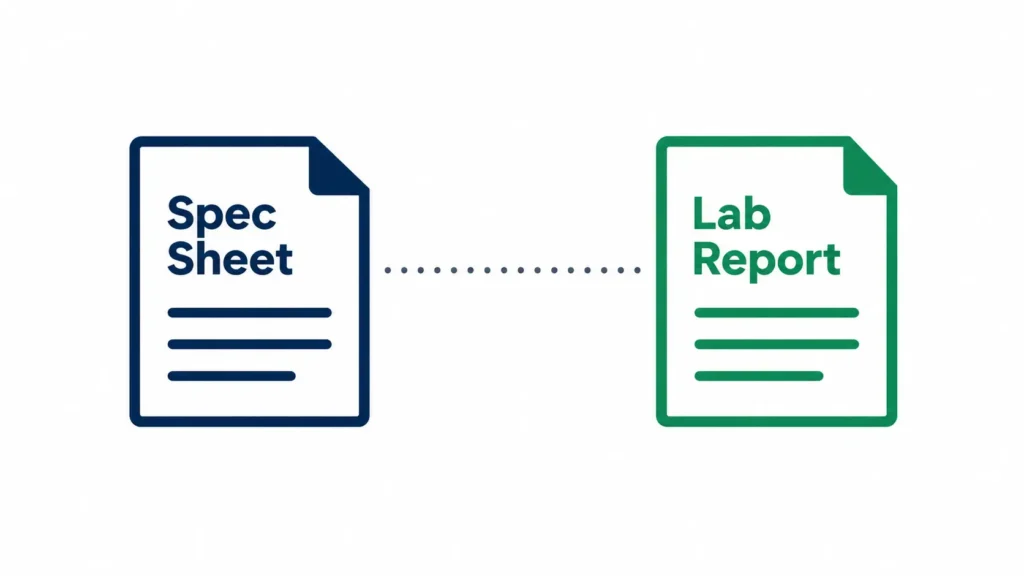
What buyers typically assume is “fine” is the supplier’s own self-reported spec sheet, taken at face value because it looks professional and includes numbers. But a spec sheet is a claim, not a verification. The gap between what’s written and what’s true only surfaces when an independent inspector — SGS or an equivalent third party — pulls a fresh sample at load point, or when customs pulls one at the border. A rejection is rarely about the commodity being unsafe in absolute terms; it’s about the documented spec not matching the tested reality, which is a compliance failure even when the product itself is usable. This is what we mean by “spec drift” — the slow separation between what a contract promises and what a container actually contains, and it’s the single most common root cause behind a held shipment.
Moisture content is the clearest example. Cashew nuts, sesame seeds, and soyabeans all have narrow acceptable moisture bands for long-haul shipping; a batch that tests fine at the farm gate can drift upward in transit if drying and storage conditions weren’t controlled, and that drift is what a destination lab report catches — not the exporter’s original claim.
What Buyers Do That Increases Their Own Risk (Without Realising)
Most first-time importers haven’t been shown what to check, so the risk they add isn’t carelessness — it’s an unfilled gap in process. Recognising these patterns is the fastest way to close it.
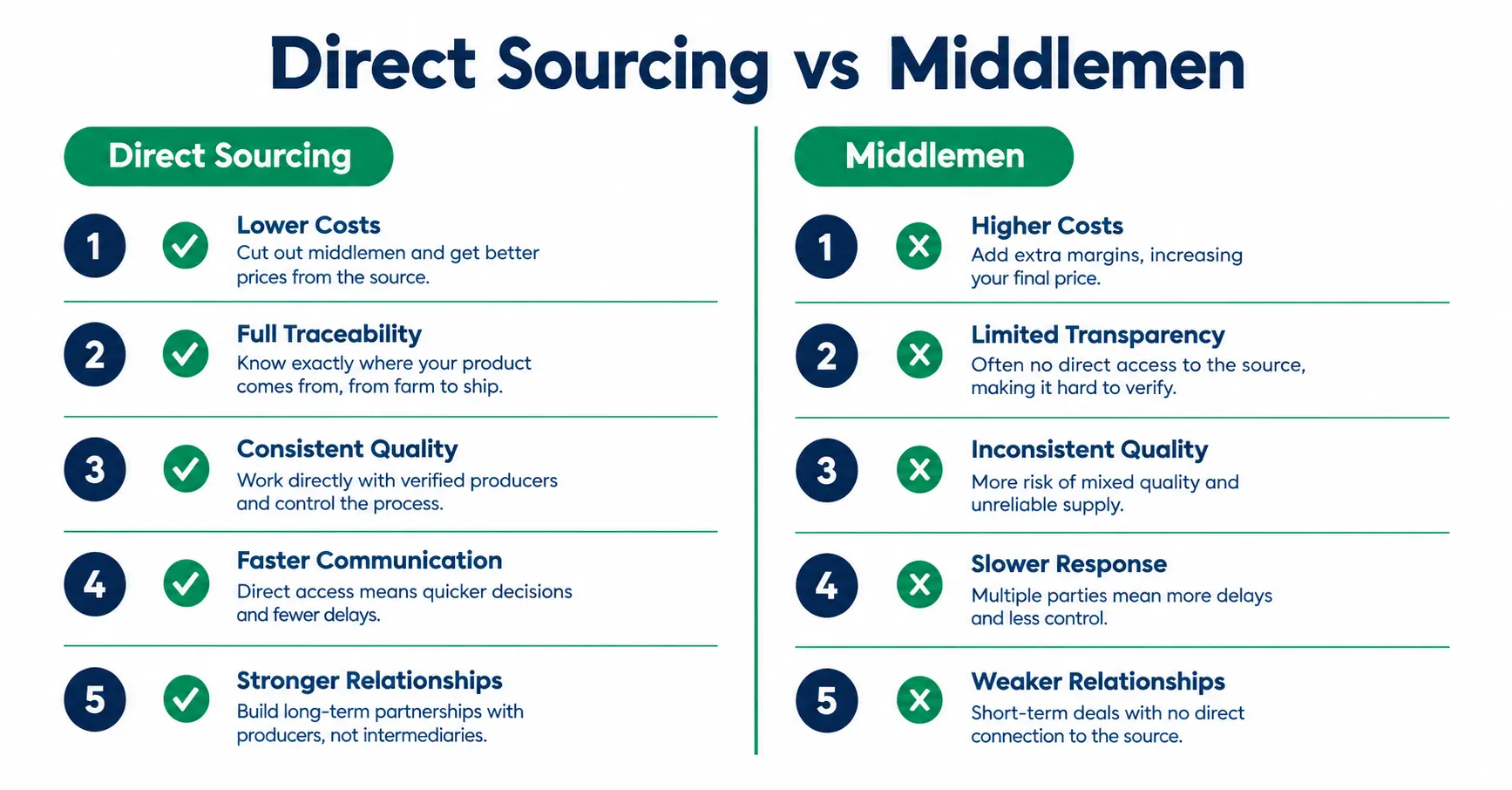
Accepting a supplier’s self-reported spec without third-party verification. A spec sheet from the exporter is a starting point for negotiation, not proof of compliance. Buyers who skip independent testing at load point are effectively importing on trust alone.
Treating the Certificate of Origin and the phytosanitary certificate as interchangeable. They answer different questions — one confirms where the goods came from for tariff and trade-agreement purposes, the other confirms the goods are pest- and disease-free for entry. Missing either one, or assuming one covers the other, is a common cause of a hold.
Not confirming batch-level traceability before payment terms are agreed. If a supplier cannot show which farms or aggregation points fed a specific lot, there’s no way to investigate or correct a spec issue before it becomes a customs problem.
Assuming a supplier’s past clean shipments guarantee the next one. Agro-commodities are agricultural, not manufactured — moisture, pest pressure, and quality vary by harvest season and by lot, so a supplier’s track record doesn’t substitute for testing the batch in front of you.
Underestimating documentation lead time. Phytosanitary certificates, SGS reports, and Certificates of Origin all take real processing time from the issuing bodies. Buyers who lock a shipping date before documentation is confirmed create the time pressure that leads to corners being cut.
What a Fully Compliant Shipment Actually Requires
A shipment that clears without incident isn’t lucky — it has passed through a structured sequence where each stage closes the gap the previous one could have left open. This is the logic behind our own Zero-Rejection Protocol™.
Sourcing. Traceability starts here: knowing which farms or aggregation points a lot came from, so any issue found later can be traced back and corrected rather than guessed at.
Grading. Raw commodity is graded against the agreed spec — moisture, foreign matter, defect count, size or count-per-kilogram, depending on the commodity — after aggregation, not before, because aggregation is where variation between individual farm lots gets absorbed into a single batch.
Testing. Independent laboratory testing, commonly through SGS or an equivalent internationally recognised inspection body, verifies the graded batch against contract spec and against destination-market thresholds (aflatoxin limits for cashews and shea, pesticide residue limits referenced against Codex Alimentarius maximum residue levels, and moisture content for shipping stability).
Packaging. Packaging materials and labelling must match what the documentation claims — net weight, lot number, and product description all need to correspond exactly to the paperwork travelling with the container, because a mismatch here is a common trigger for identity checks at the border.
Documentation. This is where UK- and EU-bound shipments need, at minimum: an SGS or equivalent inspection report, a phytosanitary certificate from the exporting country’s plant health authority (NAQS, for Nigerian-origin produce), a Certificate of Origin, and a commercial invoice and packing list that reconcile exactly with the inspection report.
Delivery. Final checks confirm the shipped documents match the vessel manifest before departure — the last point at which an error is cheap to fix rather than a demurrage cost waiting at the destination port.
Every day a container sits under a customs hold accrues demurrage charges and, for a manufacturer running to a production schedule, downstream line downtime that usually costs more than the shipment itself. A structured, documented process before departure is what keeps that risk on the exporter’s side of the transaction instead of landing on yours.
A Practical Pre-Shipment Checklist
This reduces risk — it isn’t a guarantee, because agricultural products carry inherent variability no process eliminates entirely. Use it to evaluate your current or prospective supplier today.
- Ask for the independent inspection report, not just the spec sheet. Confirm it was issued by a recognised third party (SGS or equivalent) and that the sample date matches the batch you’re buying.
- Confirm the phytosanitary certificate will be issued within the required window before departure. For UK-bound plant products, this generally means no more than 13 days before or after the vessel leaves origin.
- Verify the Certificate of Origin is being prepared separately and matches the exporting country and HS code on your commercial invoice.
- Request batch-level traceability — which aggregation point or region the lot originated from, and whether that can be documented if a query arises later.
- Cross-check moisture and aflatoxin thresholds against your destination market’s limits, not just the exporter’s general spec sheet, since limits can differ by product and by import market.
- Confirm packaging and labelling will state net weight, lot number, and product description exactly as they appear on the inspection report and invoice.
- Build documentation lead time into your shipping date, rather than setting the date first and treating certification as something to catch up on.
- Ask what happens if a test result doesn’t match spec before loading — a supplier with a real quality process has an answer; one without a process usually doesn’t.
If you’re evaluating a new supplier relationship or want a spec-by-spec walkthrough of what a compliant shipment looks like for your specific commodity, BV Integrated’s team can talk through your sourcing requirements before you commit to an order.
Frequently Asked Questions
What is a phytosanitary certificate, and why does my shipment need one?
A phytosanitary certificate is issued by the exporting country’s plant health authority confirming a consignment has been inspected and is free of quarantine pests and diseases. UK and EU customs require it for regulated plant-origin commodities, and a missing or expired certificate is one of the most common reasons a shipment is held.
What does an SGS report actually verify?
An SGS (or equivalent third-party) report independently verifies a batch’s quality and quantity against the contracted specification — moisture content, foreign matter, defect count, and similar parameters — through physical inspection and lab testing, rather than relying on the exporter’s self-reported figures.
What is NAQS and why does it matter for Nigerian-origin commodities?
The Nigeria Agricultural Quarantine Service (NAQS) is the government body responsible for inspecting and certifying agricultural exports from Nigeria, including issuing phytosanitary certificates. A shipment leaving Nigeria without proper NAQS certification does not meet the documentation standard UK and EU customs expect.
How long does export documentation typically take to arrange?
Timelines vary by commodity and certificate type, but phytosanitary certificates, SGS inspection reports, and Certificates of Origin all require lead time — commonly one to two weeks combined — which is why documentation should be scheduled before a shipping date is locked, not after.
What’s the difference between a Certificate of Origin and a phytosanitary certificate?
A Certificate of Origin confirms which country a product came from, primarily for customs tariff and trade-agreement purposes. A phytosanitary certificate confirms the product is pest- and disease-free for import. Both are typically required, and one does not substitute for the other.
Why would a shipment be rejected even if the product itself is good quality?
Rejection is frequently a documentation and compliance failure rather than a product-quality failure — a certificate that’s missing, expired, or doesn’t match the batch, or a spec sheet that no longer reflects what an independent test finds in the container.
What moisture content is acceptable for shipping cashew nuts or sesame seeds long-haul?
Acceptable moisture bands are narrow and specific to each commodity and buyer contract; exceeding them increases the risk of spoilage or pest activity in transit, which is why independent testing at load point — not just the original farm-gate figure — matters.
Can I import African agro-commodities without using a freight forwarder or customs broker?
It’s possible for experienced importers, but most UK and EU buyers working with African-origin plant commodities for the first time use a broker or forwarder familiar with IPAFFS pre-notification and phytosanitary documentation requirements, since errors there are a common cause of delay.
How is demurrage cost calculated when a shipment is held at customs?
Demurrage is charged per day (or per set period) once a container exceeds its free storage allowance at port, and the rate and free-time window are set by the shipping line and terminal — so cost accrues daily for as long as a documentation or inspection issue remains unresolved.
What should I look for when evaluating a new African commodity supplier for the first time?
Ask for an independent inspection report tied to your specific batch, confirm they can name their certifying body (SGS, NAQS, or equivalent), and check whether they can trace the lot back to its source — a supplier who can answer all three has a real compliance process, not just a spec sheet.